
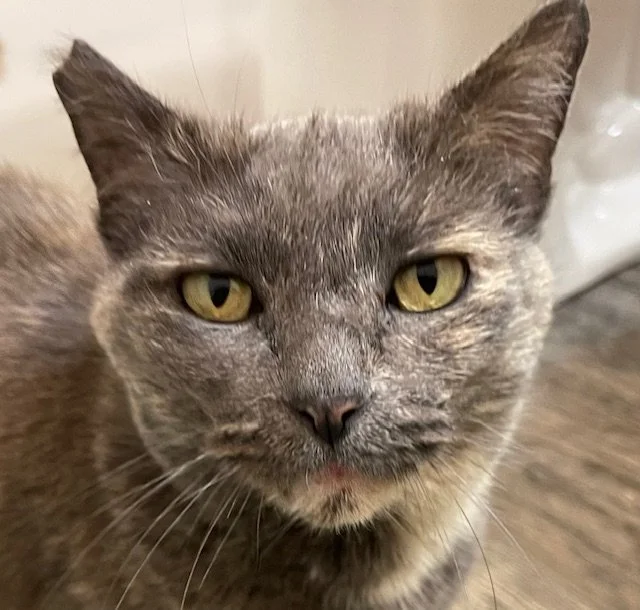
The "Universal Sign": Understanding Ear-Tipped Cats in Kern County
If you’ve been walking through your neighborhood or a local park here in Bakersfield and spotted a cat with a straight "clip" across the top of its ear, you might have wondered if the cat was injured or had been in a fight.
Actually, that little clip is a "badge of honor." It’s the universal sign that the cat is a healthy, sterilized, and vaccinated member of our community.
What is an Ear-Tip?
An ear-tip is a professional surgical mark that identifies a community cat has been through the TNR (Trap-Neuter-Return) process. While the cat is under anesthesia for their spay or neuter surgery, a veterinarian gently removes about a quarter-inch from the tip of one ear.
It is a painless, safe procedure that heals quickly while the cat is resting, and it serves a vital purpose: It tells the world this cat is fixed.
Why is Ear-Tipping So Important?
At The Whisker Project, we use ear-tipping because it’s the only way to identify a sterilized cat from a distance.
No "Double Trapping": It prevents a cat from being unnecessarily trapped and put under stressful anesthesia a second time.
Saves Resources: It allows our volunteers to focus their time and your donation dollars on the cats who actually need to be fixed.
Public Health: It signals to animal control and neighbors that the cat has been vaccinated against rabies and is not contributing to the kitten population explosion.
I Found an Ear-Tipped Cat—What Should I Do?
In most cases, the best thing you can do for an ear-tipped cat is nothing at all. If the cat looks healthy, clean, and alert, they are likely part of a "managed colony." This means a kind neighbor or a Whisker Project volunteer is already looking out for them, providing food, and monitoring their health.
The Golden Rule: Leave them where they are. Moving a community cat out of their established territory is incredibly stressful for them and creates a "vacuum" that just allows new, unfixed cats to move in.
When to Seek Help for a Community Cat
While ear-tipped cats are generally very self-sufficient, sometimes they need an extra hand. Here is who to contact:
1. If the cat is injured, ill, or in immediate danger:
If you see a cat that is limping, has a visible wound, or appears severely ill (discharge from eyes/nose or extreme weight loss), please contact our local professional animal services immediately. They have the medical partnerships and legal authority to provide emergency care:
Kern County Animal Services: (661) 868-7100
Bakersfield City Animal Control: (661) 326-3436
2. If you see cats or kittens WITHOUT ear-tips:
This is where The Whisker Project comes in! If you see new cats or a litter of kittens in your neighborhood that don't have the "badge of honor" on their ear, please reach out to us. We want to get them fixed and vaccinated before the population expands.
A Bakersfield Pro-Tip: Surviving the Heat
During our brutal Kern County summers, if you see an ear-tipped cat "loafing" in the shade, they are just trying to stay cool. The kindest thing you can do is place a bowl of fresh, clean water in a shaded spot.
Safety Note: Please avoid using metal bowls! In the Bakersfield sun, metal gets hot enough to burn tiny tongues. Light-colored plastic or ceramic bowls are much safer.
Together, we are making Bakersfield a safer place for every whisker. Thank you for respecting our ear-tipped neighbors!
Want to help us tip more ears? Click below to Donate to our Surgery Fund or Sign up to Volunteer.